Peptavo is Jointly Accredited for 20 CME hours. Learn more about accreditation
PEPTAVO

The Stack Source LLC1908 E 11th Street Austin, TX 78702support@peptavo.com(512) 827-8158DBA: Peptavo
Peptavo is Jointly Accredited for 20 CME hours. Learn more about accreditation
Get volume discounts if you are getting 3 or more clinicians certified
Book a Call
You can learn a lot about peptides for free, but no free peptide certification online carries accredited credit. Here is what free courses, webinars, and guides teach, what they leave out, and how to tell a real certification from a certificate of completion.

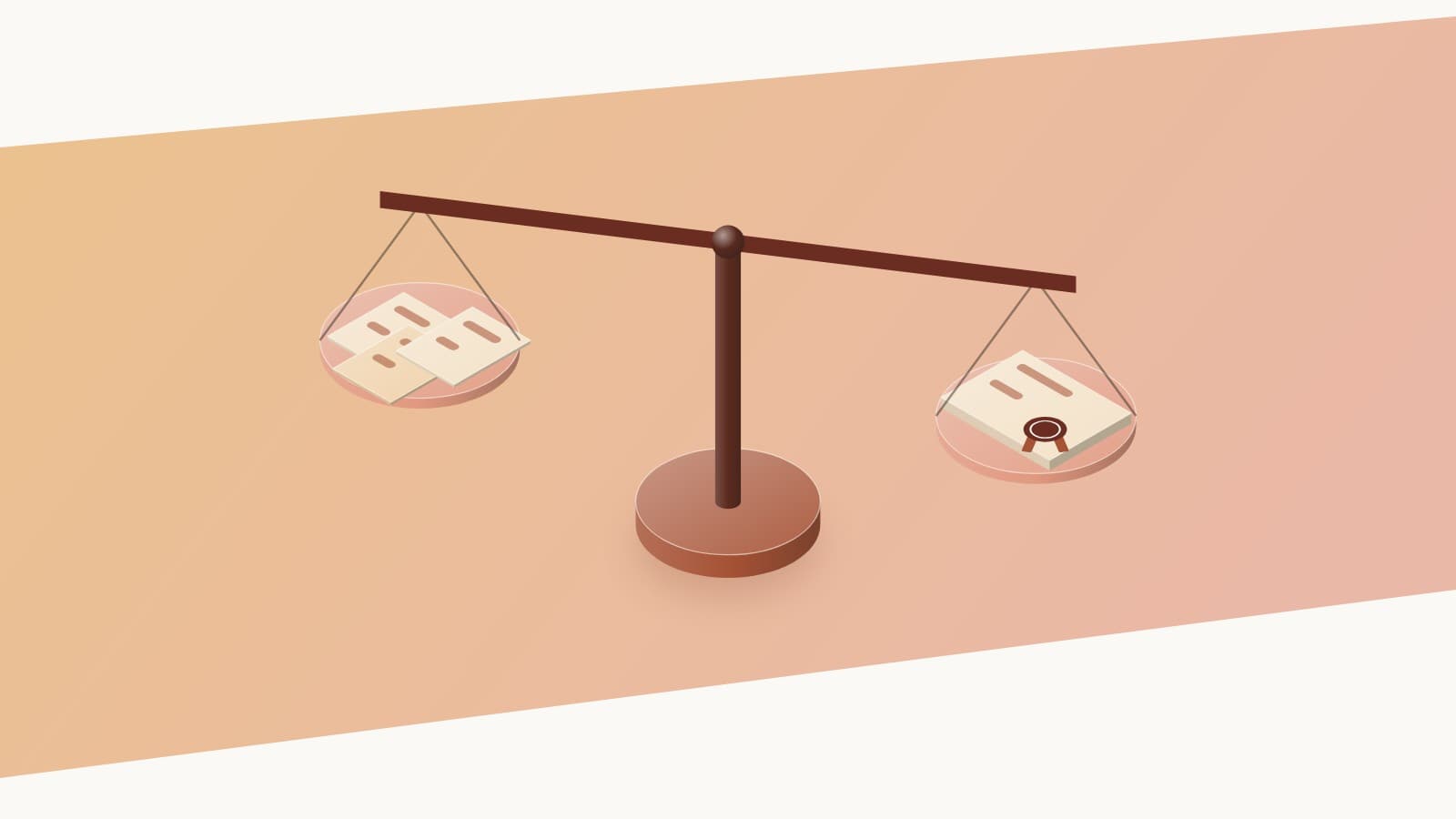
You can find plenty of peptide training online for free, but no free peptide certification online carries accredited CME or CE credit, and none gives you a credential an employer or patient can verify. Free courses are good for the science and the regulatory basics; accredited certification starts at $499 and is the only kind that counts toward your license.
The difference shows up when you renew your license or a patient asks how you trained. A certificate of completion from a free webinar shows you watched something. An accredited certification shows an outside body reviewed what you were taught, checked it for commercial bias, and confirmed you passed. This guide walks through what free peptide training exists in 2026, who pays for it, and when it makes sense to pay.
Checked October 14, 2026. Peptavo publishes this guide and sells an accredited peptide certification. We name the free resources we think are worth your time, including our own, and say plainly where free is enough.
Not one with accredited credit. Several free peptide courses end in a certificate of completion, and none of the ones ranking for free peptide certification carries CME or CE credit. Every accredited peptide therapy certification we found charges tuition, from Elite NP's $499 nursing course to A4M's $5,824 physician track. Our peptide certification cost guide prices all of them.
These are the free courses and webinars that come up when you search for free peptide certification or a free peptide course, checked against each provider's own page.
| Free course |
|---|
| Provider |
|---|
| What you get |
|---|
| Credit |
|---|
| The catch |
|---|
| Peptide Foundations and Peptide Legality | Peptides Academy | Two intro courses free, plus the first module of each paid course; a shareable certificate after the Foundations exam | None stated | The rest of the catalog unlocks with paid credits, and the courses are open to anyone, licensed or not |
| Peptide Starter Course | My Peptide University | Six self-paced modules for clinicians new to peptides, from mechanisms to legal access, and a certificate of completion | None stated for this course | The page calls it "not advanced certification" and points to the paid Peptide Therapy Certification |
| Free Peptide Training | Medical Entrepreneur, taught by Adam Sewell, MD | Clinical overview of 20+ peptides, dosing, monitoring, case studies, and marketing, with a certificate of completion | None; the page says it doesn't offer CME | Sign-up asks for your phone number and SMS consent, and leads to a paid certification program |
| Peptide Therapy: Where Do We Go From Here? | Empower Pharmacy | An on-demand expert panel on weight management, men's health, safety, sourcing, and regulation | None stated | Watching takes your name, email, phone, state, and practice details, and the host compounds the products discussed |
| Peptide webinars | GenScript | Recorded webinars on peptide design, synthesis, quality control, and assays | None | Lab research only; nothing on patients or prescribing |
| University peptide and biochemistry courses | NPTEL and SWAYAM, listed on Class Central | Peptide structure, synthesis, and analysis | None | Free to audit, but the certificate needs a paid, proctored exam, and none covers patient care |
The pattern holds across all six. The free layer introduces the faculty and the basics, and the clinical depth, the exam that means something, and any credit sit behind a paid program. That is a fair way to sell a course. It also means a free certificate of completion tells a board, an employer, or a patient very little.
Course provider previews. SSRP Institute publishes free articles and podcast episodes, while its Cellular Medicine Mondays series shows a preview and asks you to become a member for the full video.
Free accredited CME on approved peptide drugs. This is the one place free and accredited overlap. Sites such as FreeCME.com list free activities on GLP-1 receptor agonists and related FDA-approved peptide drugs, with real AMA PRA Category 1 credit. They are worth taking. They cover one drug class, in one indication, and they stop short of the broader peptide therapy a clinic program involves, so they earn you credit without a peptide certification.
Primary sources. The most underrated free peptide training is the source material itself: the FDA's compounding pages, its list of bulk drug substances under evaluation, your state medical or nursing board's scope rules, and the published trials. Our free guides on whether peptides are legal, who can prescribe peptides, the FDA compounding categories, and how to vet a compounding pharmacy link to every one of those sources.
| Free courses and webinars | Accredited peptide certification | |
|---|---|---|
| Cost | $0, often in exchange for your contact details | $499 to $5,824 in 2026 |
| Continuing education credit | None, except single-topic CME on approved drugs | AMA PRA Category 1, ANCC, ACPE, or AAPA credit, depending on the program |
| Independent review | None required | The accredited provider must meet ACCME standards for evidence and independence from industry |
| Assessment | Usually none | A graded exam you must pass |
| Verifiable credential | A certificate of completion, if anything | A certification with a number an employer or patient can check |
| Clinical protocols and cases | General overviews | Dosing protocols, monitoring, case studies, and consent and documentation tools |
Credit, independence, and verification decide whether training counts.
Credit. License renewal runs on accredited hours. Nurse practitioners renewing through the ANCC need 25 pharmacology hours each cycle. A free webinar adds nothing to that count; an accredited course can cover most of it in one go.
Independence. Accredited continuing education has to follow the ACCME's Standards for Integrity and Independence, which keep companies that sell the products out of the content. Most free peptide education is funded by someone with something to sell: a pharmacy, a supplier, or a course. Some of it is excellent, and none of it has been checked by anyone outside the company.
Verification. When a patient or a hiring manager asks how you trained, "I watched a pharmacy webinar" is a weak answer. A certification with a public record is a strong one, which is why we put every Peptavo certification in a public registry.
Between free and accredited sits a crowded middle: low-cost courses that issue their own certificate with no outside credit behind it.
ABAC Training's peptide mini course is a good example. It costs $550, runs about ten hours, and ends with an online exam and an ABAC Peptide Therapy Certificate. The page lists no CME or CE credit, and the course is open to estheticians, wellness coaches, and other people without a medical license. ISSCA's $1,285 Advanced Peptide Therapy Certification also lists no accredited credit.
Courses like these can teach you something. But a certificate anyone can earn without a license, reviewed by nobody but the company that sold it, carries little weight with a board, an employer, or a malpractice carrier. If you're going to pay, Elite NP's $499 course with 7 ANCC hours costs less than either and comes with accredited credit.
Ask four questions, free course or paid.
First, who is the accredited provider? A real program names one, such as a jointly accredited organization, and prints the designation statement with the number and type of credits. "CME available" with no provider named, or credit listed as pending, may not count when you renew.
Second, who pays for it? If a pharmacy or supplier hosts it, expect its products in the examples.
Third, is there an exam, and what do you get when you pass? A certification with a number and a public record can be checked. A downloadable PDF can't.
Fourth, does it teach practice or only science? Look for dosing protocols, monitoring, contraindications, consent, documentation, and the legal basis for prescribing in your state.
Peptavo costs $2,900 and carries 20 accredited credits through Pinnacle Conference, LLC, which is jointly accredited by the ACCME, the ACPE, and the ANCC. The same course earns AMA PRA Category 1 Credits for physicians, ANCC contact hours for nurses, AAPA Category 1 CME for physician assistants, and ACPE credit for pharmacists, plus credit for dentists and athletic trainers. That works out to $145 a credit with no membership or add-on fees, and for AMA PRA Category 1 credit it is the lowest price among programs whose credit is approved and whose accredited provider is named.
The course runs 12 modules on more than 30 peptides, taught by Jesse Morse, MD, on demand. It includes eight patient case studies, a pocket guide, a pricing playbook, and a patient consent and handout kit. When you pass, your certification goes into a public registry with its own number, valid for two years.
Before you spend anything, start with what's free. Our guides above cover the law, prescribing authority, and compounding. The free peptide consent form shows the template language from the course kit. When you want the credit and the credential, the physician course page and the nurse and NP course page lay out the full curriculum, and the accreditation page has every designation statement.
No accredited one. Free courses such as Peptides Academy's Peptide Foundations and My Peptide University's Peptide Starter Course give you a certificate of completion, but no free program we found awards accredited CME or CE credit for peptide therapy, and none gives you a credential an employer can verify. Accredited peptide certification costs $499 to $5,824 in 2026.
Not one with accredited credit. Peptides Academy and My Peptide University issue free certificates of completion for their intro courses, and both point to a paid program for the full certification. Accredited peptide therapy certification costs $499 to $5,824 in 2026.
The free clinical courses that rank highest are Peptides Academy's Peptide Foundations, My Peptide University's Peptide Starter Course, and Medical Entrepreneur's Free Peptide Training. GenScript's webinars and the university courses on Class Central cover lab science. Expect a certificate of completion at most, and an offer for a paid program at the end.
There is free peptide training NPs can use, such as pharmacy webinars, society articles, and free CME on FDA-approved peptide drugs like GLP-1 receptor agonists. For a full peptide therapy course with ANCC hours, the lowest-priced option is Elite NP at $499. Peptavo's course carries ANCC contact hours alongside credit for five other professions.
Only when an accredited provider offers them, which in practice means single-topic activities on approved drugs. A webinar from a pharmacy or a course provider's free intro module carries no credit.
No. A certificate of completion shows you finished a course. A certification means you passed an assessment, and accredited certifications add credit that counts toward renewal and an outside review of the content.
No. Your authority to prescribe comes from your license and your state's scope of practice. Our guide to who can prescribe peptides covers each license. A certification documents your training for patients, employers, and malpractice carriers.
For prescribers, the primary sources: the FDA's compounding guidance and bulk substance categories, your board's scope rules, and the published trials. Add free accredited CME on approved peptide drugs for credit, and treat pharmacy webinars as useful but sponsored.